Labs · Real client · shipped
Can AI help a home business launch online?
Aidan runs an embroidery business out of a garage. No website, no listings, a phone full of photos. We gave it eleven days and whatever AI could honestly do.
The question
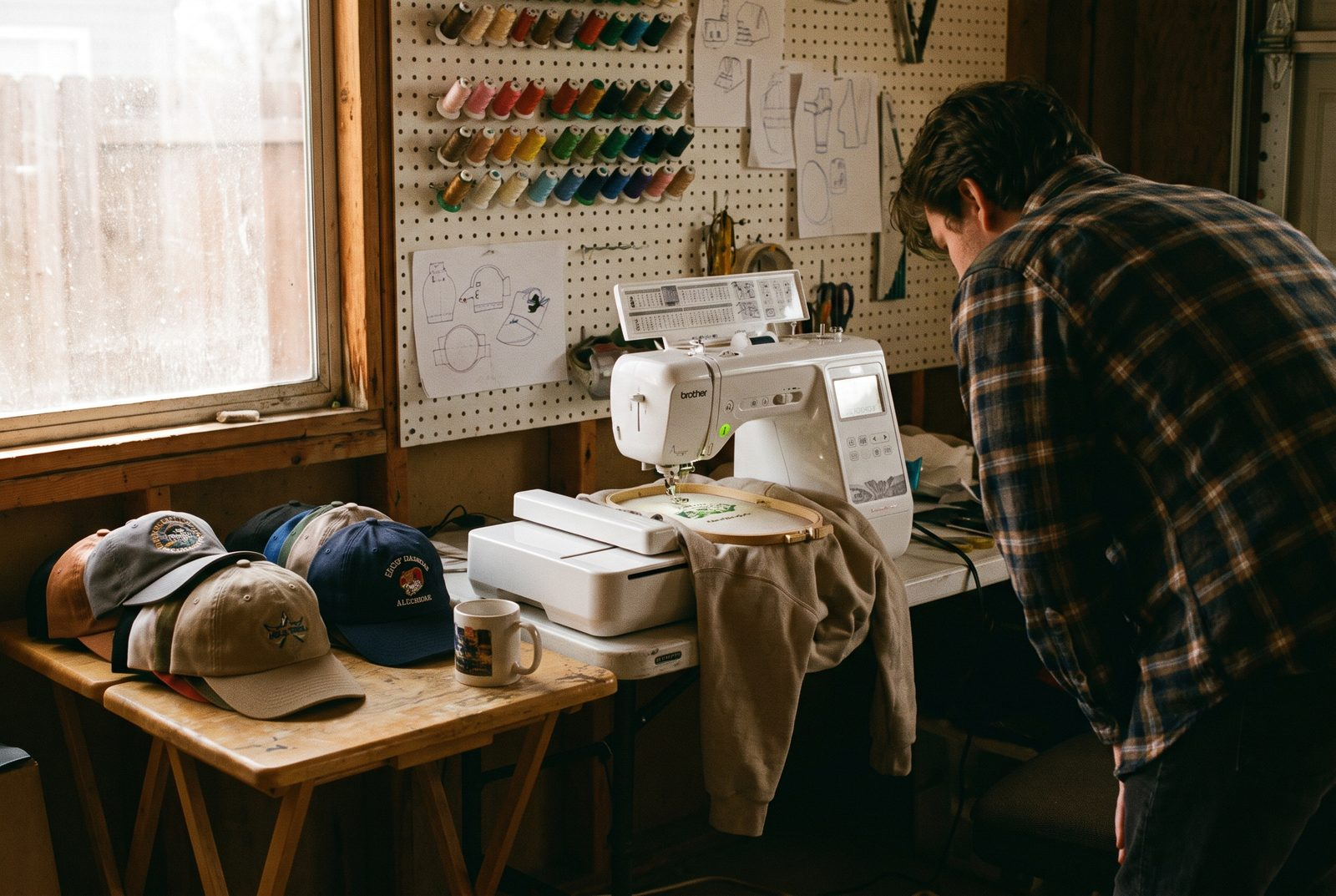
Aidan has been embroidering caps, polos and church anniversary shirts out of her garage for six years. Her marketing is a Facebook page and the fact that people in Tallahassee know her. She had no website, no price list she could point at, and eleven hundred photos on her phone.
The question wasn't whether AI could build a website — obviously it can. It was whether AI could close the gap between "talented person with a machine" and "business a stranger can buy from." Those are very different problems and only one of them is technical.
The eleven days
We gave it eleven days because that's when her next big order was due and I wanted a real deadline rather than a project that drifts. Four evenings of actual work, spread across two weeks.
Day one was not a computer. Day one was me asking her what she actually sells, and discovering she sells three completely different things to three different kinds of buyer: individuals who want one custom gift, small businesses who want thirty branded polos, and churches and family reunions who order in bulk once a year. Nothing was going to work until that was untangled, and no tool was going to untangle it for us.
Where AI genuinely earned its keep
Photography. She had good photos taken badly — right subject, bad background, garage lighting. Cleaning up eleven hundred of those by hand is a week nobody has. It took an afternoon, and the results were good enough to sell from.
Product descriptions, with a caveat I'll get to. First drafts for forty products in about an hour, which turned a task she'd been avoiding for two years into a task she finished in one sitting.
And the boring structural work — sitemap, page copy, the FAQ, the shipping policy she'd never written down. All of it mediocre-to-good on the first pass and genuinely good after she corrected it.
Where it fell down
The forty product descriptions all sounded like the same person wrote them, because the same thing did. Read one, they're great. Read six, you notice the rhythm. We ended up rewriting about fifteen in her voice, and those fifteen are the ones on the products that actually sell.
Thread color was a real problem. Background removal is excellent; color accuracy on metallic and variegated thread is not. Three products had to be reshot properly because the cleaned-up versions were, frankly, lying about what the customer would receive. That mattered more than anything else on this list and I'd flag it for any craft business doing the same thing.
And AI was worse than useless on pricing. I asked it. It gave me confident, reasonable-sounding numbers that were roughly thirty percent below what her work is worth, because it was averaging the internet — and the internet is full of people underpricing handmade goods.
The part that mattered most
We spent one full evening on pricing with no AI in the room at all. Machine time, thread cost, digitizing time, the setup fee she'd never been charging, and a minimum order that let her stop taking jobs that lost her money.
She raised her prices about twenty-two percent. She has not lost a customer over it. What changed wasn't the number, it was that she could explain the number — and a person who can explain their price stops apologizing for it.
Would I recommend it
Yes, and this is the clearest case on the whole Labs page. A home business with real skill and no online presence gets more out of these tools than almost anyone, because the gap being closed is a labor gap, not a talent gap.
But read the shape of this honestly: AI did about seventy percent of the hours and roughly none of the decisions. Every choice that determined whether this worked — what she sells, who to, at what price, in whose voice — was made by a human at a kitchen table. Anyone selling you the other version of this story is selling you something.